
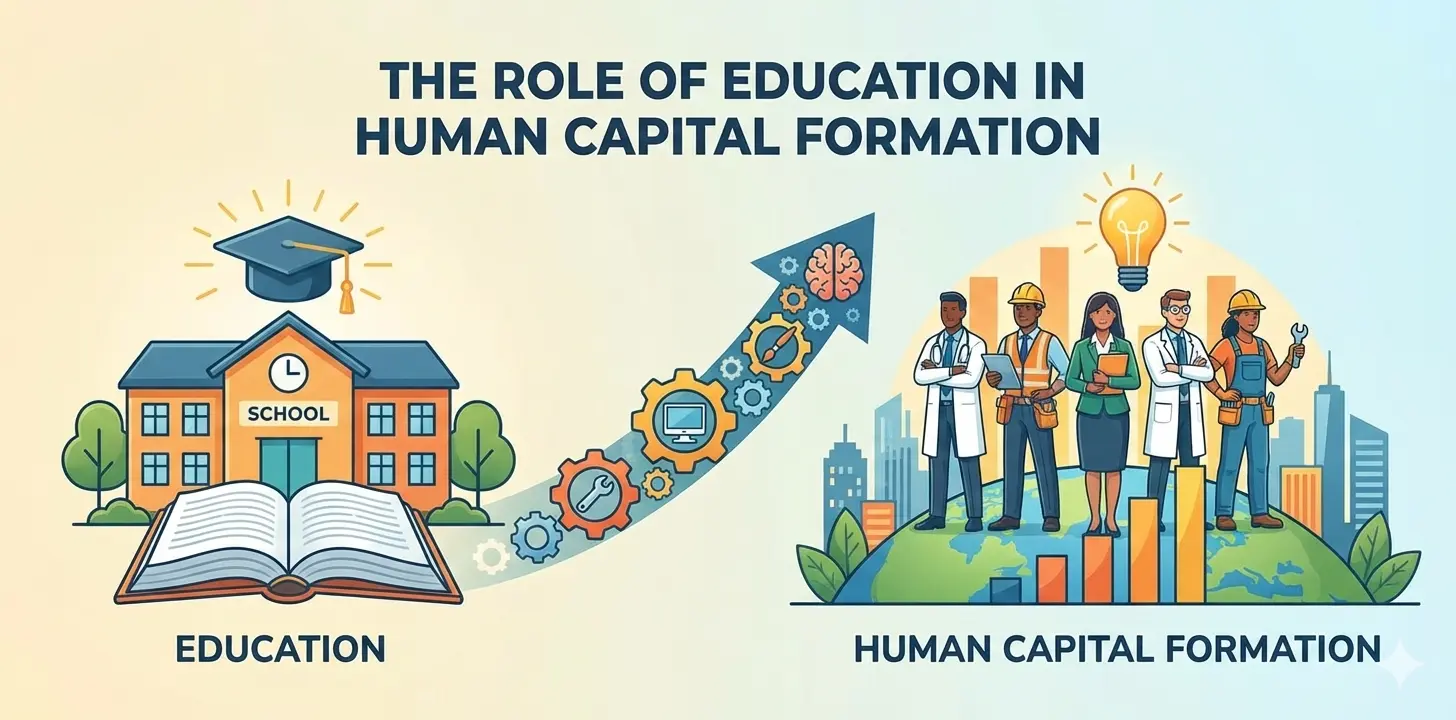
What Is the Role of Education in Human Capital Formation
Education is the driving force behind sustainable development and prosperity. In the current competitive and knowledge-driven global economy, the true power of a nation depends on the quality of its human resources. Human capital is defined as the knowledge, skills, abilities, and values that people acquire through learning and experience. It is essential to understand what is the role of education in human capital formation in order to develop policies and strategies that can help in long-term development and progress.
At Care India Welfare Trust, education is considered a potent instrument of empowerment and change. The trust thinks that quality education for the underprivileged is the key to unlocking human potential. Education is not just about learning; it is about developing the skills and attitude to succeed in life. This aptly defines what is the role of education in human capital formation in developing competent and confident citizens.
Understanding the Formation of Human Capital
The formation of human capital refers to the efforts made to increase the productivity of individuals by investing in education, health care, skill development, and training. Among these, education is the most important because it directly increases knowledge and skills.
Education starts the process of human capital development from a very young age. Basic education helps in developing literacy, numeracy, and intellectual skills. As people move from one level of education to another, they acquire specialised knowledge and technical skills that help them in their careers.
Education as the Basis for Economic Development
Economic development is highly dependent on the quality of the labour force. More educated and trained personnel are more efficient, innovative, and responsive to change. In the context of the role of education in the development of human capital, it is important to note its significance in economic productivity.
Education improves employability by matching skills with labour market requirements. Education stimulates entrepreneurship and fosters innovation in sectors like technology, agriculture, healthcare, and manufacturing. Countries that emphasise education experience increased GDP, reduced unemployment, and enhanced living conditions.
Moreover, education raises one’s potential income. People with higher educational attainment usually have access to better-paying employment, resulting in enhanced financial security. This mobility helps in reducing poverty and improving the economy as a whole.
Social Development and Empowerment
Education is a crucial factor in achieving equality and social justice. It is a source of empowerment that equips people with knowledge, confidence, and decision-making capacity. The comprehension of the role of education in human capital development also requires understanding the role of education in social change.
Educated people are more likely to be involved in democratic activities, value diversity, and make a positive contribution to society. Education instils values like tolerance, cooperation, and moral accountability. It also decreases crime rates and promotes social cohesion.
Another significant area where education makes a difference is in gender equality. When girls attain quality education, they become empowered and have access to economic opportunities. This not only brings a positive change in people’s lives but also enhances the quality of family and social life.
Education and Workforce Development
Workforce development is one of the most robust bases of human capital development. Education is a process that enables a person to have the necessary technical knowledge and skills required in the current industrial scenario.
The growing use of technology has led to an increased need for specialised skills. The education system needs to be flexible enough to train people in the use of technology, communication skills, and problem-solving skills. This flexibility is the key to understanding the role of education in human capital development in the 21st century.
Major Economic Contributions of Education
Education is the key driver of economic change and enhances the competitiveness of a nation.
Major Economic Benefits of Education Include:
- Improved productivity and efficiency
- Enhanced earning capacity and job prospects
- Stimulation of innovation and technological development
- Building entrepreneurial skills
- Attracting investment
The above contributions clearly establish that education is more than a social sector service; it is a major economic investment.
Social Transformations and Development through Education
Education also brings about dramatic social transformations and developments.
Major Social Gains Include:
- Poverty and income inequality reduction
- Fostering gender equality and women's empowerment
- Enhanced health awareness and life expectancy
- Increased civic engagement and democratic ideals
- Increased social cohesion and cultural empathy
Through these, education develops both individuals and society, making it a core component of human capital development.
The Role of NGOs in the Promotion of Education
Non-governmental organisations have an important role to play in increasing access to education, especially for marginalised groups. Care India Welfare Trust is an organisation that aims to offer educational support, awareness, and skill development to disadvantaged children and youth.
The organisation aims to fill the educational gap through scholarships, outreach, and learning centres. The mission statement of the organisation shows that it understands the role of education in the formation of human capital.
Digital Literacy and Future Readiness
In the digital age, education must provide people with technological literacy. Digital literacy, coding skills, and data analysis are now core skills. An education system that incorporates modern technology is ready for the future and the industries that will be created.
Preparing the next generation for innovation and global competition is what is the role of education in human capital formation.
Conclusion
The most effective tool for developing high-quality human capital is education. Education increases knowledge, boosts productivity, ensures equality, and encourages innovation. Through education, nations and societies invest in sustainable development and stability.
Organisations such as Care India Welfare Trust understand that education is the key to empowerment. The efforts of such organisations are geared towards ensuring that children and youth achieve their full potential.
In summary, the importance of education in human capital development can be highlighted as follows: the development of human potential into economic and social power. Education develops professionals, citizens, and innovators. Through education, we develop stable communities and thriving nations that are ready to face the challenges of the future.
Frequently Asked Questions (FAQs)
1. What is human capital formation?
Human capital formation is the enhancement of the skills, knowledge, health, and abilities of people through education and training.
2. What is the role of education in human capital formation?
Education is the key to increased productivity, innovation, better employment prospects, and social development.
3. How does education affect economic growth?
Education raises the efficiency of the labour force, raises the level of income, fosters entrepreneurship, and facilitates technological change.
4. Why is education crucial for social development?
Education is the answer to poverty, gender inequality, poor health awareness, and civic engagement.
5. How do NGOs help in human capital formation?
NGOs help in providing quality education, scholarships, skill development, and awareness initiatives, especially in the case of disadvantaged groups.